
MARKET • MEDIUM ATTENTION
Grand Exchange flipping
Place patient buy offers below the current instant-buy price and patient sell offers above the instant-sell price. Profit is compensation for providing liquidity and accepting price risk.
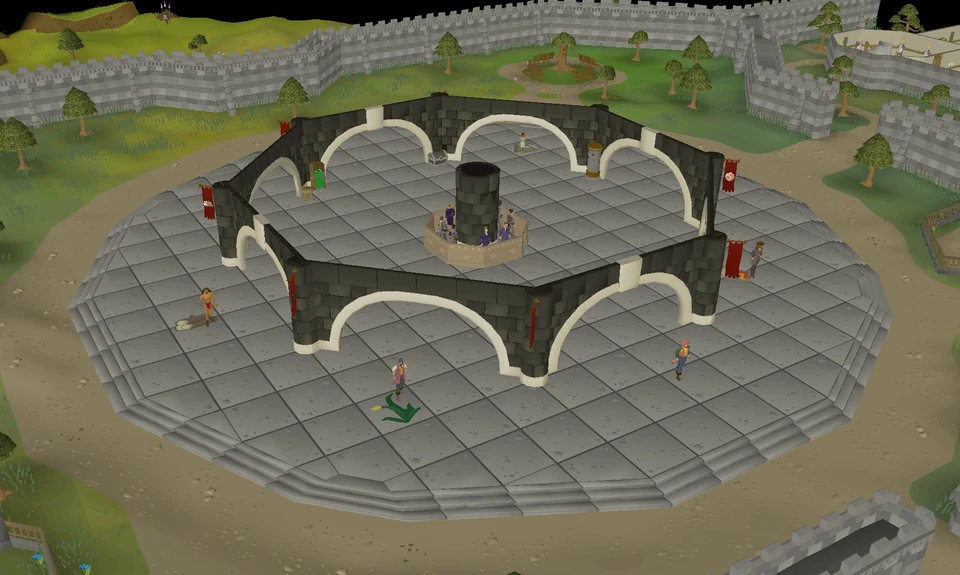
Starter capital, membership for eight slots, and familiarity with buy limits
Image credits →Medium riskBEFORE YOU START
Requirements
Hard requirements and unlocks that materially change the method.
- Enough capital to diversify rather than committing the bank to one item
- Open Grand Exchange slots
- Knowledge of the item's four-hour buy limit and normal daily volume
- A strict maximum position size and a plan for stale offers
INVENTORY
Set up the method
- ✓Reserve cash so every slot can be repriced without panic-selling another position
- ✓Start with liquid supplies, consumables, runes, or commonly traded gear
- ✓Record actual completed buys and sales; do not infer an order book from one price check
- ✓Calculate profit after Grand Exchange tax before opening the position
STEP BY STEP
Run the method
- 1Select a liquid item and inspect recent price and volume direction.
- 2Use a one-item completed trade only when the information value exceeds the tax and spread cost; otherwise start with a small patient offer.
- 3Place a buy offer near the patient side of the spread and wait. Avoid repeatedly chasing a moving market.
- 4When filled, list the item at a realistic patient sell price after calculating tax.
- 5Review stale offers on a fixed schedule. Reprice from new evidence, not boredom, and record the realized result.
LOADOUTS
Gear and route options
Low capital
- High-volume runes
- Food and potions
- Common ammunition
- Small margins with fast turnover
Medium capital
- Frequently traded gear
- Skilling supplies
- Bossing consumables
- Several independent positions
High capital
- Expensive equipment
- Slow, wider margins
- Strict allocation caps
- No all-in positions
DETAILS
Mechanics that matter
No visible order book
The Grand Exchange does not show every outstanding bid and ask. Public prices are recent completed trades, so the true spread and available quantity remain uncertain.
Buy limits
Most items cap how many can be bought in a rolling four-hour window. Limits constrain turnover and can leave slots idle if ignored.
Tax
A transaction tax is deducted from eligible sales. The in-game confirmation shows the exact current tax; use that value because rates and exemptions can change.
Inventory risk
A filled buy is a position, not profit. Updates, new content, merching groups, and ordinary demand shifts can move the resale price before you exit.
REAL RETURNS
Calculate your profit
- Realized profit = sale proceeds after tax − purchase cost.
- Expected hourly profit must include fill time and idle capital, not just margin × buy limit.
- Cap each item at a percentage of the bankroll and keep a trade log; one lucky flip is not a repeatable rate.
Patient offers and diversification are the edge. Speed is useful only when it comes from better information, not constant repricing.
Never treat a scanner margin as guaranteed. Low-volume items can show huge spreads that cannot be filled at scale.
Rates and prices change. Sources are provided for mechanics and current reference data; verify market values in game before committing capital.
MARKET • MEDIUM ATTENTION

High Level Alchemy
Convert items into a fixed amount of coins while gaining Magic experience. Profit depends entirely on buying below the high-alchemy value after rune cost.
Open guide →RECURRING • LOW ATTENTION
Herb runs
Farm every herb patch you can reach quickly, then let the crops grow while you do something else. Profit comes from patch count, survival rate, and seed-to-herb margin.
Open guide →RECURRING • LOW ATTENTION
Bird house runs
Replace four bird houses on Fossil Island for Hunter experience, bird nests, seeds, and rings while spending only a few active minutes per cycle.
Open guide →SKILLING • HIGH ATTENTION
Blast Furnace bars
Smelt bars quickly on a Blast Furnace world. The furnace halves the coal normally required, making coal-based bars the main profit methods.
Open guide →Prices change. Your math shouldn't.